
- Home
- Post tension UAE
- Ras Al Khaimah
Post tension design in Ras Al Khaimah
PT design review, optimisation, preliminary design support, full PT design packages, and site supervision and stressing support for Ras Al Khaimah buildings, prepared to the Ras Al Khaimah Municipality structural regulations, which have their own chapter on post-tensioned concrete.
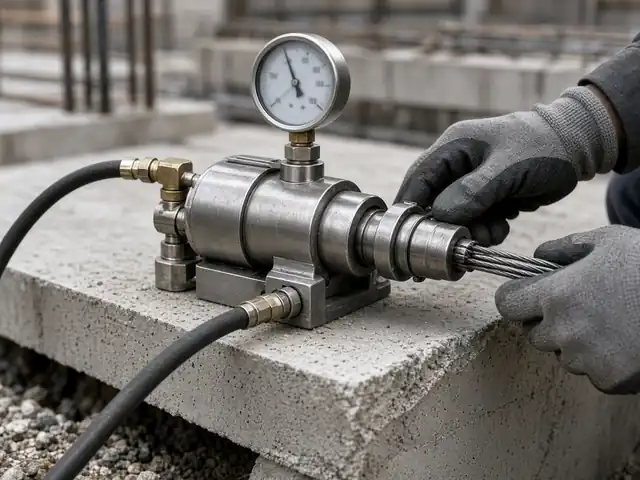
PT in Ras Al Khaimah.
Ras Al Khaimah is building hotels and resort residences on the coast and the islands, alongside mid-rise residential, offices, car parks and industrial buildings inland. Hotel and resort buildings bring long-span ballrooms, podiums over parking and transfer levels where guest-room grids meet public areas, all places where post-tensioning saves depth and columns. Coastal sites add chloride exposure, which drives cover, crack control and grouting.
The emirate also sits in the part of the UAE with the higher seismic demand. Published probabilistic seismic hazard studies place Ras Al Khaimah among the highest in the country, well above Dubai and Abu Dhabi, because of its proximity to the Dibba fault and the Oman mountain front. For PT flat slabs that matters at the slab-column connections, which must be checked for drift compatibility even when they are not part of the lateral system.
What we do on Ras Al Khaimah projects.
Our post-tension services in Ras Al Khaimah
- PT design review: a check of the PT design and drawings against ACI 318-19 and the RAK structural regulations, including the losses, cover, P/A and vibration requirements, before the consultant submits.
- PT design optimisation: slab thickness and tendon layout optimised within the span/40 and 200 mm minimums, with vibration analysed where a thinner slab is proposed.
- Preliminary design support: concept-stage slab depths, grids and transfer options for hotel and residential schemes, with the seismic category checked early.
- Full PT design package: RAM Concept model, calculation report with explicit loss calculations, tendon layouts, profiles and stressing schedules.
- Site supervision: pre-pour inspections of duct profiles, supports, anchorages and cover.
- Stressing support: stressing sequence (including two-end stressing on long tendons), calculated elongations and record review.
Technical focus in Ras Al Khaimah
The regulation's explicit loss, vibration and deflection requirements line up with our technical guides on friction and wobble losses, floor vibration in PT slabs and long-term deflection, Eurocode vs ACI. The 3D thermal and lateral analysis requirement is covered in shrinkage and creep in PT slabs, and bonded system detailing in bonded vs unbonded post-tensioning and anchorage zone and bursting reinforcement.
Delivered from Dubai, on site by arrangement.
Design and review are delivered from our office in Al Warqa 1, Dubai. Coordination meetings and site visits in Ras Al Khaimah are agreed in the scope.
Who does the work: our engineering team brings 15+ years of post-tension design and site experience across the GCC and is led by our Lead Engineer, Mohamed Shahid. PT slabs are analysed and designed in RAM Concept, with calculations referenced clause by clause to the governing code.
Technical guides for PT design in Ras Al Khaimah.
Worked formulas, code clauses and FAQs from our engineering team. See the full PT design guide library.
Seismic design of post-tensioned slabs and flat plates
Drift compatibility, punching shear under lateral drift, ACI 318 gravity-frame rules and the UAE and Saudi seismic context.
Read the guide →Anchorage zones and bursting reinforcement in PT slabs
Local and general zones, bursting and spalling forces to ACI 318-19, EN 1992-1-1 and BS 8110, with slab edge details and a worked example.
Read the guide →Fire resistance of post-tensioned slabs (EN 1992-1-2 and BS 8110)
Tendon temperature, axis distance and thickness to EN 1992-1-2 and BS 8110-2, unbonded tendon behaviour, spalling and post-fire checks.
Read the guide →Questions about post tension design in Ras Al Khaimah.
Does Ras Al Khaimah have its own structural regulations for PT slabs?
Yes. The Ras Al Khaimah Municipality Structural Regulations include a pre-stressed concrete chapter with requirements on slab thickness, concrete strength, cover, losses, pre-compression, stressing stresses, duct spacing and vibration.
Which codes apply to post-tensioned slabs in Ras Al Khaimah?
The regulations reference ACI 318-19 for concrete and post-tensioned elements, TR43 2nd edition, ASCE 7-16 for gravity and wind loads and UBC 97 for seismic loads. Where they conflict with these codes, the municipality's regulations prevail.
What is the minimum PT slab thickness in Ras Al Khaimah?
Span/40 and not less than 200 mm, unless vibration is properly analysed and verified for a thinner slab.
Is third-party review required in Ras Al Khaimah?
It may be, by pre-agreement with the municipality, for buildings 125 m or taller and for non-conventional structural systems. The consultant and the municipality confirm whether it applies.
Is seismic design more important in Ras Al Khaimah than in Dubai?
Published hazard studies place Ras Al Khaimah among the highest-hazard areas in the UAE, so we check the seismic design category early and verify slab-column connections for drift.
Can you adapt a PT design from another emirate for Ras Al Khaimah?
Yes. We review it against the RAK regulations, which are tighter than the base code in several places, and revise the model, calculations and drawings where needed.
Who submits the PT design to RAK Municipality?
The approved consultant of record submits the structural package. We prepare the PT design and calculations for them and answer comments.
Send the drawings. Get an answer from our engineers.
WhatsApp or email the architectural or structural set, the location and what you need. The reply comes from the engineers who will do the work, with a proposed scope and programme.
- +971 52 118 2569
- Telephone
- +971 52 118 2569
- Office
- Al Warqa 1, Dubai, UAE
- Hours
- Sunday – Thursday, 09:00 – 18:00 GST