
- Home
- PT design optimisation
Post-tension design optimisation
PT value engineering done properly: take an existing PT or RC slab scheme and make it leaner: thinner slabs, fewer strands, less reinforcement and simpler details, with every change checked against the code in a RAM Concept model.
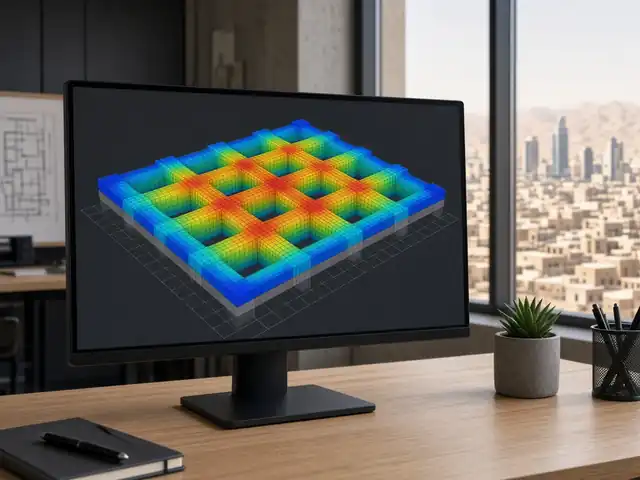
Where the savings come from.
Optimisation is a design exercise, not a cut list. Every change is backed by calculations.
Most slab designs carry material that does not need to be there. Thickness is chosen early and never revisited, the load balancing target is set conservatively for every bay, mild steel is added on top of prestress where the analysis did not need it, and punching is solved with thickness instead of shear reinforcement. Optimisation revisits these choices with the full model.
Typical levers
- Slab thickness: checked against deflection, vibration, punching and fire cover rather than span-to-depth rules alone.
- Prestress level: balanced load and precompression tuned per strip, so heavily loaded bays get what they need and others do not.
- Tendon layout: banded and distributed tendons arranged to cut strand length, anchor count and clashes with services.
- Bonded reinforcement: top and bottom steel reduced to what the code and the analysis require.
- Punching shear: shear studs or drop panels where they are cheaper than a thicker slab.
- RC to PT conversion: where an RC scheme is used for long spans, a PT alternative is studied with a like-for-like comparison.
What you receive.
| Stage | Deliverable |
|---|---|
| Study | Comparison of the current and optimised schemes: thickness, concrete, strand and rebar quantities |
| Decision | Short note on risks, programme effect and approval implications |
| Design | Revised calculations and drawings, if the optimised scheme is adopted |
Quantities in the comparison come from the two models, so the team can price them with its own rates. We do not publish percentage savings because they depend entirely on the starting design; the study shows the actual numbers for your project.
Optimisation works best before tender or early in construction, when the PT contractor has not yet ordered materials. Late-stage optimisation is still possible floor by floor, but changes must be coordinated with drawings already issued. For a check without redesign, see PT design review. To compare systems at concept stage, see preliminary design support, and our guide on PT vs RC slabs.
The optimised design stays contractor-neutral: it uses the friction and anchorage data of the approved PT system, so any specialist contractor can build it. Iron Axis has no stake in PT materials or site works, which keeps the recommendations focused on the structure rather than on product quantities.
Questions we are asked about this.
Can an RC scheme be optimised with post-tensioning?
Often, for longer spans and podiums. We compare both systems on the same model before recommending a change.
Do you guarantee a saving?
No. The study reports the real quantities for both schemes; if the existing design is already efficient, it says so.
Does optimisation delay approval?
It can add a resubmission. We flag the approval effect in the study so the team can decide.
Related services and guides.
Most projects touch more than one of these. The Iron Axis home page has the full overview.
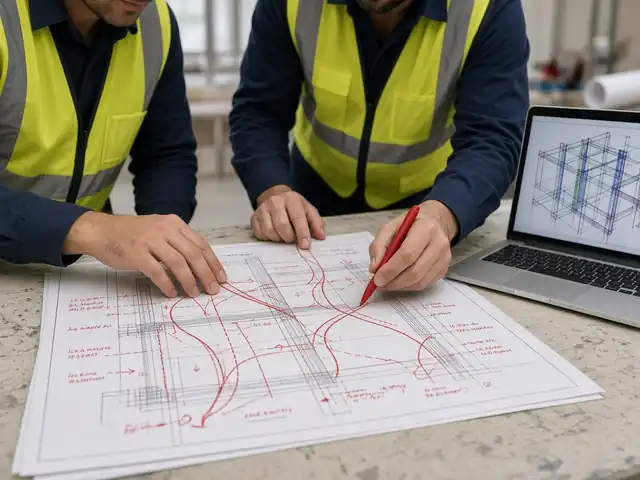
PT design review
A thorough check of a post-tension design before it is approved or built.
Read more →
Preliminary design support
Early PT schemes, thicknesses and feasibility for concept and tender stages.
Read more →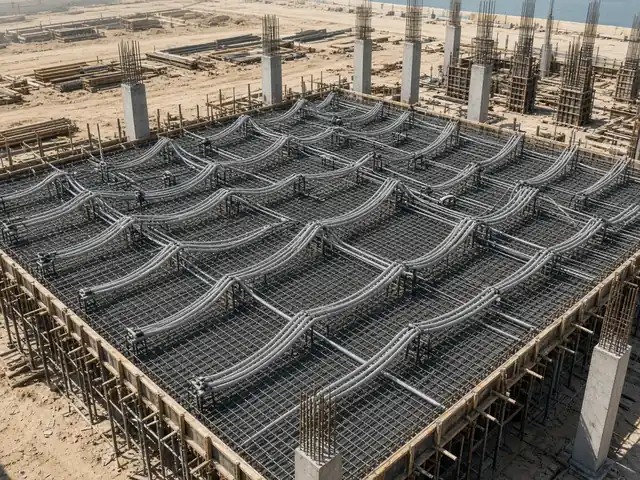
Full post-tension design package
Analysis, calculations, tendon drawings and stressing data, ready for submission.
Read more →PT vs RC slabs
A practical comparison.
Read more →Send the drawings. Get an answer from our engineers.
WhatsApp or email the architectural or structural set, the location and what you need. The reply comes from the engineers who will do the work, with a proposed scope and programme.
- +971 52 118 2569
- Telephone
- +971 52 118 2569
- Office
- Al Warqa 1, Dubai, UAE
- Hours
- Sunday – Thursday, 09:00 – 18:00 GST